Irrigation Makes It Rain? Climate Spillovers and Adaptation in India
One-fifth of the world's cropland is equipped for irrigation. This paper documents a previously overlooked climate externality of India's $100 billion investment in surface irrigation, combining five decades of administrative, climatic, and agricultural data with wind-driven variation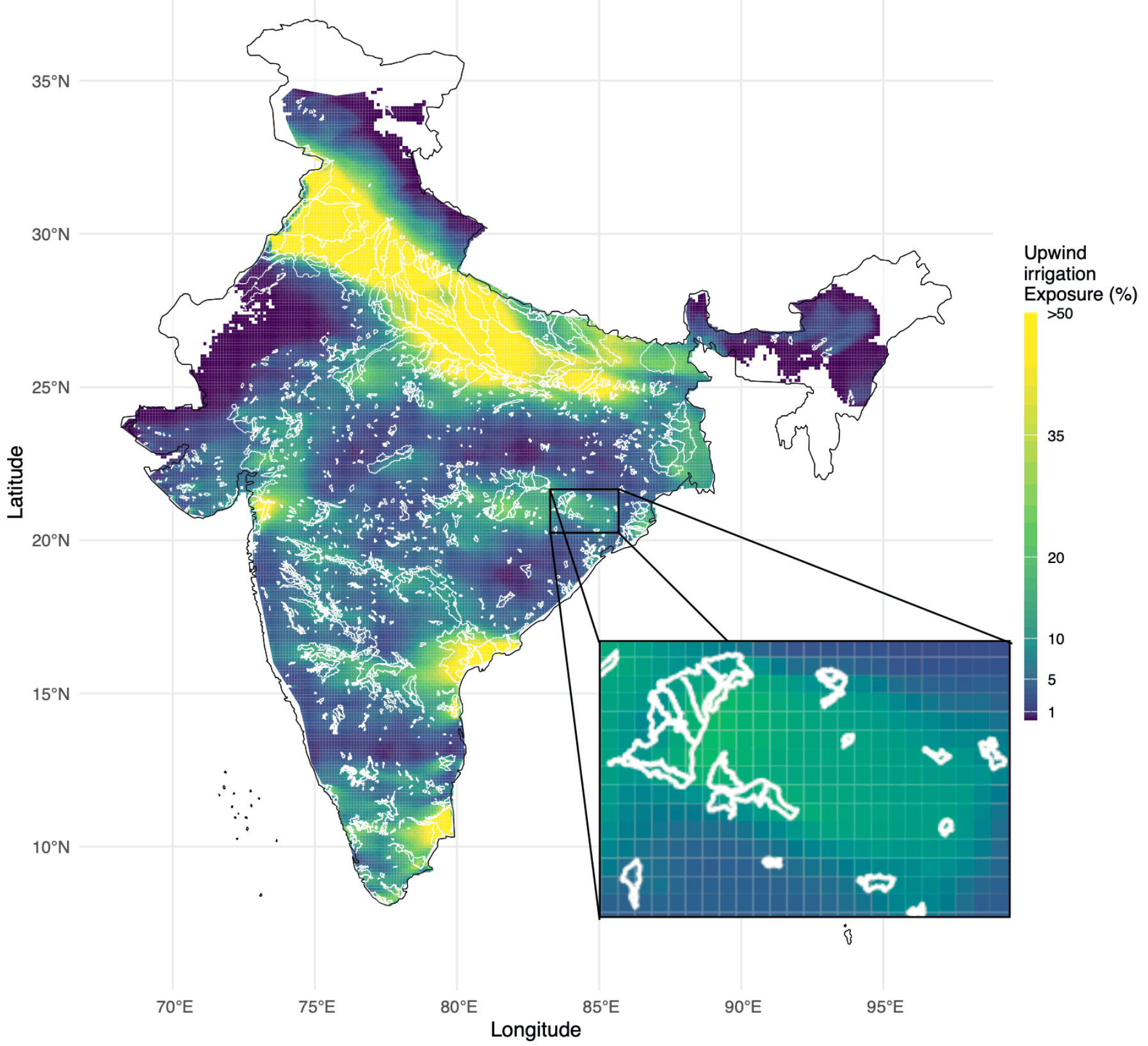 in exposure to distant canal irrigation. Over the period, increased evapotranspiration from irrigated land raised downwind rainfall
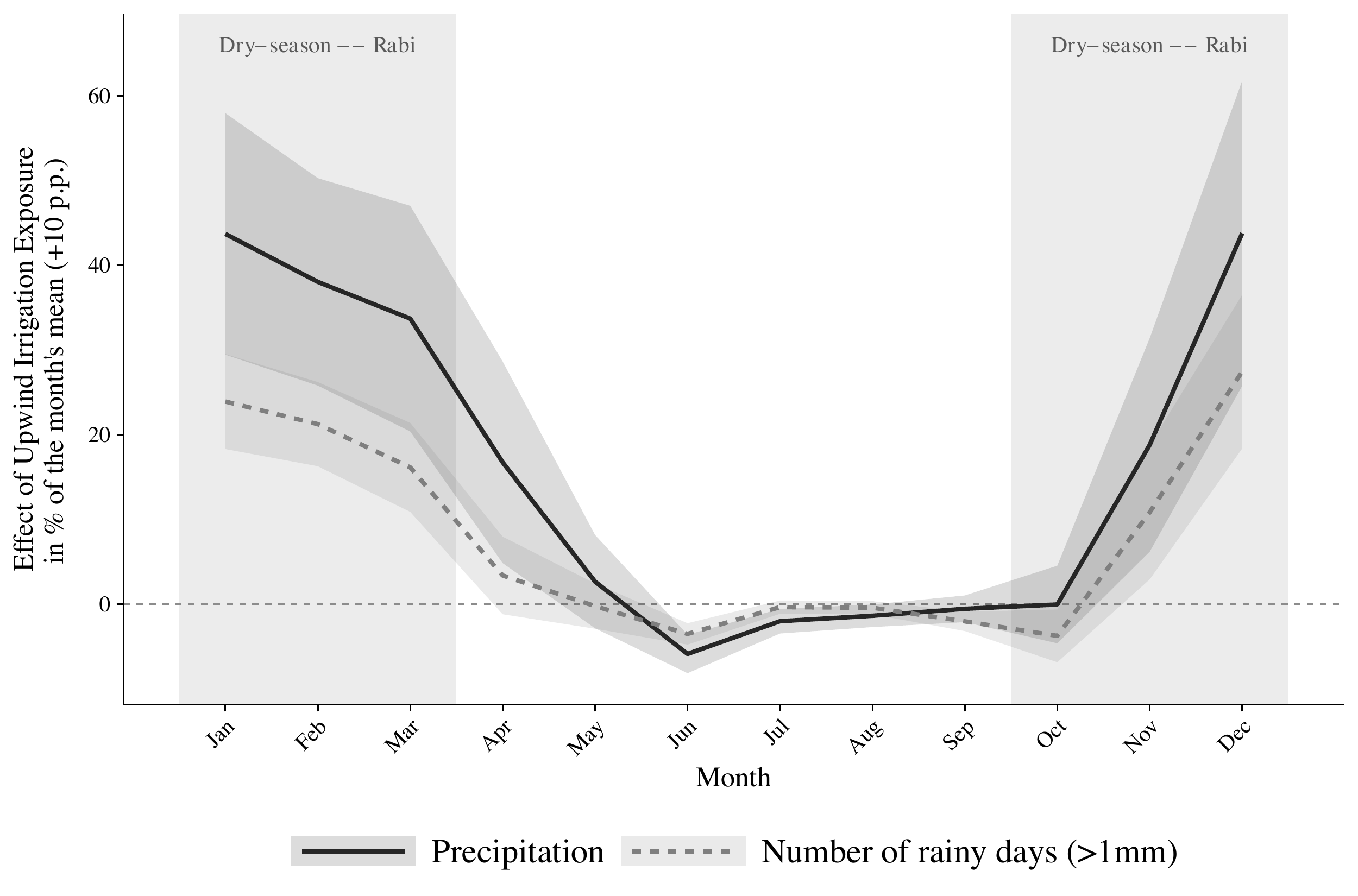 volume and frequency by 20%, primarily during the dry season. These persistent climatic changes pushed farmers to invest further in private irrigation
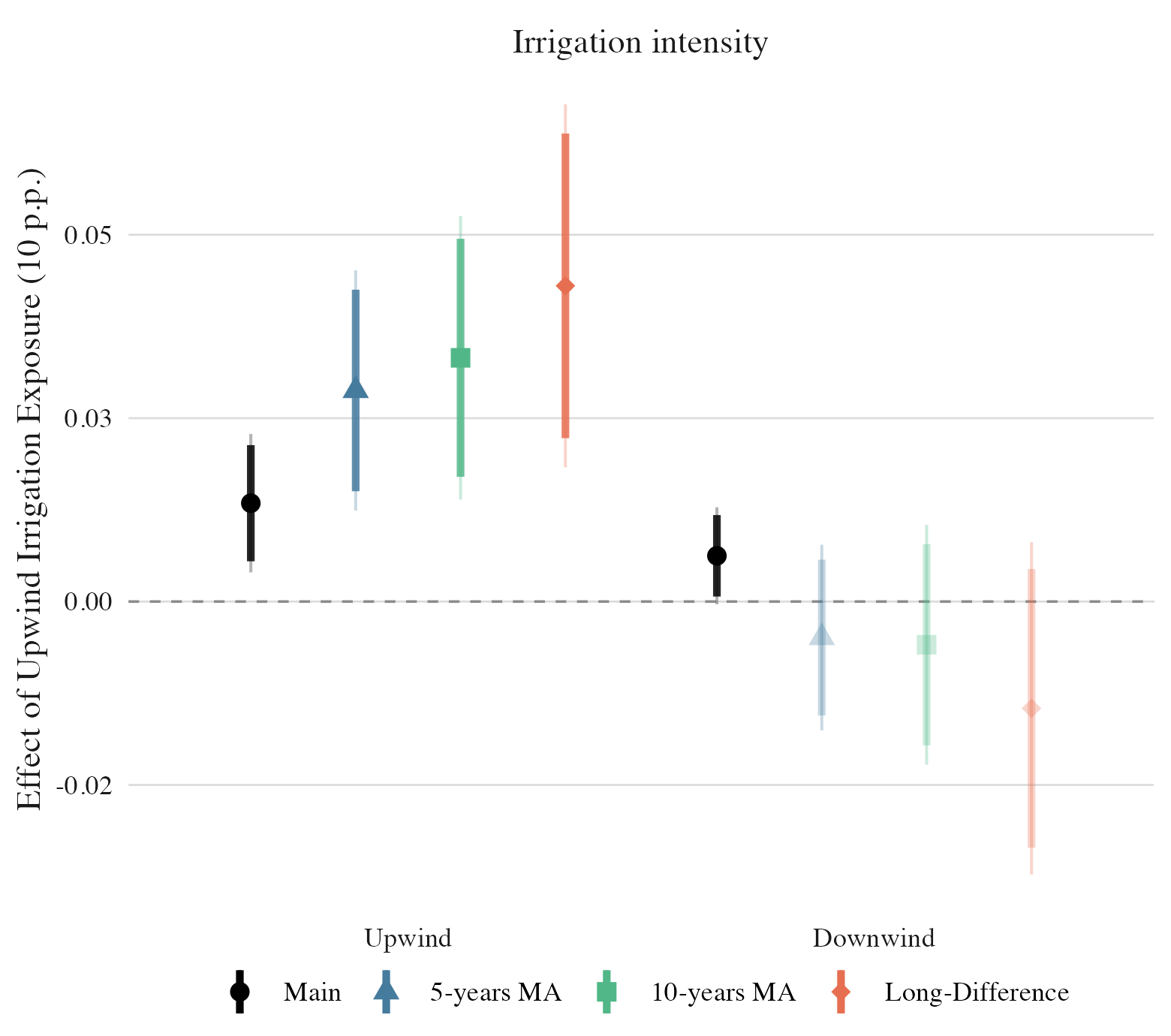 downwind in order to cultivate the second cropping season, revealing complementarities between rainfall and irrigation. In the long run, these investments helped smallholders to survive and reduced exits from agriculture. Overall, this climate externality accounts for 7 percent of India's agricultural production growth, equivalent to an additional $1 billion annually.